Facebook
 twitter


Galway Track Analysis: Who succeeds at Ballybrit?

Enda McElhinney

© Healy Racing Photos
The Galway Races remains as one of Ireland's standout summer meetings, a festival of racing that is embraced as one of the must-see social events in the calendar.
The seven-day jamboree at the Ballybrit track will attract over 140,000 spectators and encompasses racing both on the Flat and of the National Hunt variety, with something for everyone to enjoy.
Racing at Galway has been dated back to 1869. The Galway Races cannot boast the sort of quality animals and races we come to associate with a meeting such as the Dublin Racing Festival at Leopardstown, but it is still a much-loved event, filled with ultra-competitive races and intense betting heats.
Betting moves at Galway are followed with major interest, more so than anywhere else in Ireland.
The right-handed track at Galway features a steep incline to the finishing post but is generally considered a sharp track in its nature. On the Flat, the home straight is just a furlong in total.
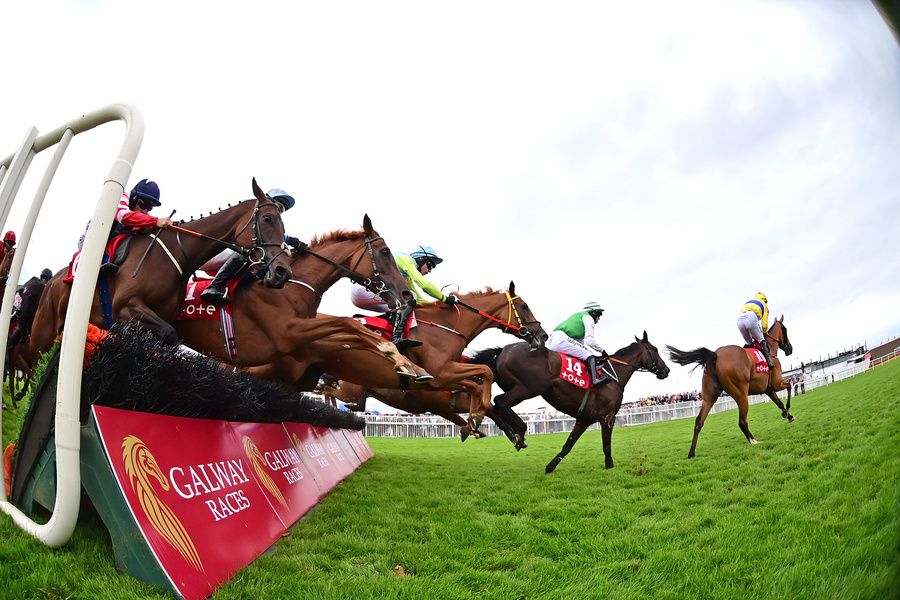
Over jumps, there are seven fences to a circuit, the last two being very close together, before a tough two-furlong run in.
The hurdles track is inside the chase track, with the final hurdle situated in the short finishing straight of little more than a furlong.
Midnite Betting Offer
Succeeding on the Flat at Galway
The Ballybrit track is turning in its nature and tight, with many jockeys labelling it a tricky place to ride.
Some luck in running is going to be needed and also a good sense of position on the track. The desire to be prominent early on often leads to plenty of early pace, so horses with good early speed are well suited to Galway.
The stiff incline that leads to the winning post means that all horses turning up here need to have proven stamina for the trip they are running.
The Galway Races, by nature, tend to attract big fields. Therefore, hold up horses are liable to run into traffic woes, often accentuated by horses who have gone too fast early on coming back through the pack.
A low draw is viewed as a positive for horses racing over 7f/1m around Galway as it facilitates a decent start and a good early position.
For both Flat and jumps horses alike, an established fondness for the track is a major asset and course specialists are commonplace.
Two major tests await the chasers
© Healy Racing Photos
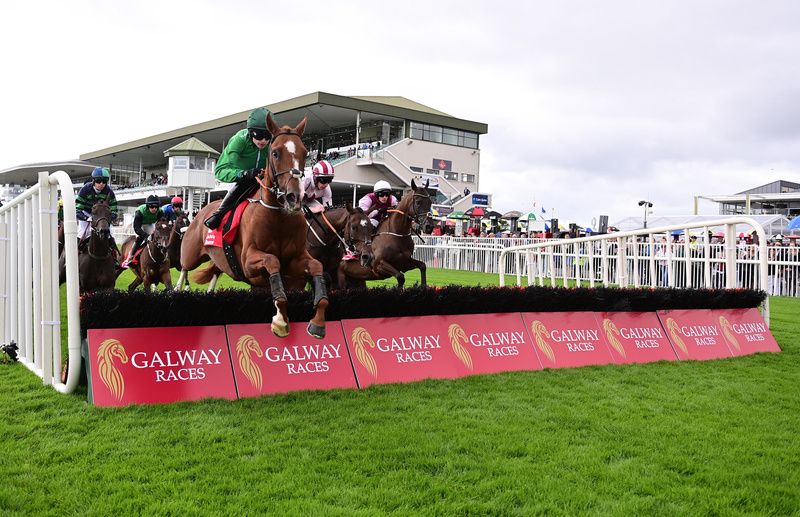
As with the Flat, getting from A-to-B over jumps at Galway can be tricky and it is a place that often rewards those who have shown a fondness for the track.
The last two fences on the chase track are extremely close together in comparison to the other obstacles, so fluency at these jumps is an absolute must.
Once they have been negotiated, it's a long and tiring run to the winning post, the most demanding finish in Ireland.
The undulating nature of the track at Ballybrit places huge demands on the jockeys, as they must remain composed and be astute in terms of getting breathers into their horses at the right moments.
No matter what the occasion or race, Flat or jumps, when it comes to the Galway Races those with experience at Ballybrit are often the ones to focus on.
For the full racing schedule, check out the Galway Races 2025 dates page.