Facebook
 twitter


Royal Ascot prize money: How does it compare to the biggest events in sport?

irishracing.com news

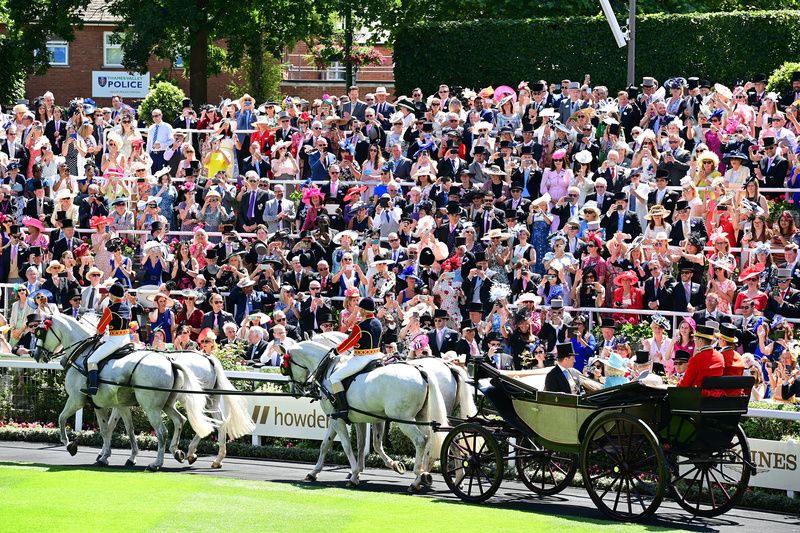 ROYAL ASCOT The Royal Carriage arrives to the parade ring for the opening day of The Royal Meeting
© Healy Racing Photos
Each carries a prize fund of €1,159,000. Yet, in the 2026 sporting landscape, the gap between horse racing and the global commercial juggernauts of sport is becoming clearer than ever.
Here we'll explore just how wide that gap is, and why, despite the financial rewards not matching those of other major sports, horse racing continues to hold such a revered place in the sporting world.
Royal Ascot's flagship prize funds
The Prince of Wales's Stakes and the Queen Elizabeth II Jubilee Stakes stand as the jewels in Royal Ascot's crown, each offering a €1,159,000 prize fund. This makes them the joint-highest value races at the meeting.
For owners, trainers, and stable staff, these are career-defining paydays. Yet racing distributes its prize money across multiple placed horses, sustaining the broader ecosystem of the sport rather than funnelling the lion's share to a single winner.
The internal racing landscape
Within horse racing itself, the prize money hierarchy tells a revealing story. The King George VI & Queen Elizabeth Stakes winner earns €978,000, marginally below the Ascot showpieces.
Drop into National Hunt, and the contrast sharpens considerably: the Cheltenham Gold Cup winner takes home €409,000, while the winner of the BoyleSports Irish Grand National receives €278,000.
Even the Randox Grand National at Aintree, the most valuable jumps race in Europe, tops out at €575,000 for its winner, just under half the value of Royal Ascot's headline prizes.
Flat racing, and Royal Ascot in particular, remains the high-water mark for prize money within the domestic racing calendar.
Ascot vs global sporting Goliaths
Step outside the world of horse racing, however, and the financial gulf becomes stark. The Premier League champions bank a staggering €202,610,000 which is approximately 175 times the value of the Prince of Wales's Stakes prize fund.
Formula One's constructors' championship is worth around €143,250,000, while the FIFA Club World Cup winner collects €99,130,000.
Even at the individual level, the gap is considerable. The 2026 Wimbledon champion walks away with €3,477,000, and winners at The Masters and the US Open Golf take home €3,889,000 and €3,717,000 respectively which are all comfortably ahead of racing's flagship prizes.
Perhaps most striking is the comparison with tennis: a US Open tennis title is worth €4,323,000 to the winner which is nearly four times the Royal Ascot prize fund, awarded to a single athlete rather than shared across an ownership and training team.
Why the Royal Ascot trophy still matters
Prize money, of course, tells only part of the story. A win at Royal Ascot, particularly in races such as the Prince of Wales's Stakes dramatically enhances a horse's breeding value, securing a legacy that extends far beyond the winner's enclosure.
The prestige of the Royal meeting, with its centuries of tradition and its place on the global racing calendar, carries an intangible worth that no prize fund can fully capture.
The 2026 data confirms that while global tournaments are chasing record-breaking prize pools, Royal Ascot remains a reminder that in sport, the trophy is often worth far more than the sum printed on the cheque.
Note: The prize money amounts listed are estimates and subject to change based on updates from the respective organisations and fluctuations in currency exchange rates.