Facebook
 twitter


How Sires Continue to Shape Cheltenham

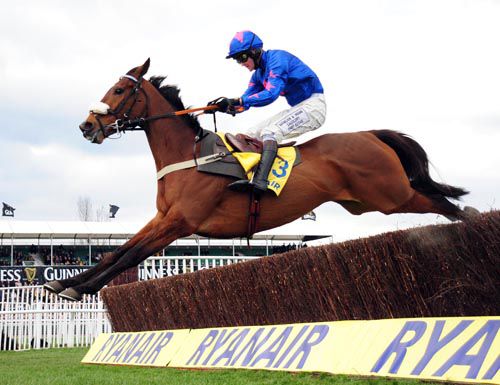 CUE CARD one of King Theatre's most prolific Cheltenham winners
© Healy Racing Photos
The Cheltenham Festival has long been regarded as the Olympics of horse racing. The four days in March are certain to expose any weakness in stamina or temperament.
Familiar sire lines regularly appear in the festival winners enclosure, established through generations of breeding and hard work.
Fashionable stallions have no place at Cheltenham; it favours the durable.
The undulations, the pace, that climb to the line all require a special blend of stamina and strength. I don’t think it’s a coincidence that certain sire lines have shaped the festival's modern history.
The Prevailing Male Lines
Any conversation about modern National Hunt breeding inevitably tracks back to Sadler’s Wells.
Celebrated as a prolific horse on the flat, his male descendants have shown huge influence in jump racing, particularly in Ireland.
Sons such as Oscar, King’s Theatre and Milan have left a significant impression on the Cheltenham Festival.
King’s Theatre emerged as a star in National Hunt breeding. He stood at Ballylinch Stud before he compiled a festival record that very few could match.
His stock proved to be versatile and performed over hurdles and fences alike. They were scopey and athletic.
Oscar, stood for many years at Grange Stud. His legacy was similar. His stock were not overly flashy at home but they improved with time and over distance. They stayed, handled tough, testing ground and most importantly, they trained on.
Milan, meanwhile, produced stayers. His stock required patience, over three miles plus they came into their own.
The Irish Advantage
The Irish have dominated the festival in recent years with a substantial proportion of horses being either Irish bred or purchased through the Irish point-to-point system.
Irish National Hunt broodmares have played a crucial part. Mares by established flat stallions being crossed with a proven jump sire are becoming popular. Giving us that cross of speed and stamina.
Those of us who have been fortunate enough to have a successful National Hunt race mare are blessed with a huge selection of National Hunt stallions to choose from.
The French Contribution
You would be blind not to notice the impact that French sires are having on National Hunt racing in Ireland and the UK.
France has long been invested in jump racing and its breeders are consistently producing strong, athletic and precocious types who slot perfectly into our system.
The French emphasis on jumping technique and early education compliments the stamina based approach in Ireland. The blend has worked particularly well in the novice divisions at Cheltenham.
When you hear the roar in a week's time, remember that those horses are a culmination of years of preparation.
Long before the horse sets foot on the course or makes its way to start, much of the work started before its dam even went to the covering shed.
Those recurring sire lines at the Cheltenham Festival are no coincidence, they are the conscious decisions of breeders with that very stage in mind.