Facebook
 twitter


Cheltenham Gold Cup: Prestige vs. The New Money Monsters

irishracing.com news

 Cheltenham 14 March 2025 Inothewayurthinkin and Mark Walsh win The Gold Cup
© Healy Racing Photos
With the Cheltenham Gold Cup just around the corner, the usual buzz is building. But this year, the conversation isn't just about who clears the last fence, it's about the money.
While the Gold Cup is still the holy grail of National Hunt racing, the latest figures show a massive gap opening up between the "glory of the jumps" and the absolute financial juggernauts of Flat racing and global sport.
The winner at Cheltenham walks away with €404,440. It's a life-changing sum for most, but when you stack it up against the 2025/26 sporting landscape, it's starting to look increasingly modest.
The number reflects the unique, slightly old-school economic structure of jump racing rather than a lack of status. In the jumps world, prize money is spread thin to sustain a massive ecosystem of owners, trainers, and stable staff, whereas global team sports are built on a "winner-takes-all" commercial engine.
The Internal Civil War: Jumps vs. Flat
Now the Gold Cup is the literal pinnacle of steeplechasing and is getting dusted by the big Flat races. We're seeing a stark divide where the "Blue Riband" of the jumps is being financially outpaced by its cousins on the Flat.
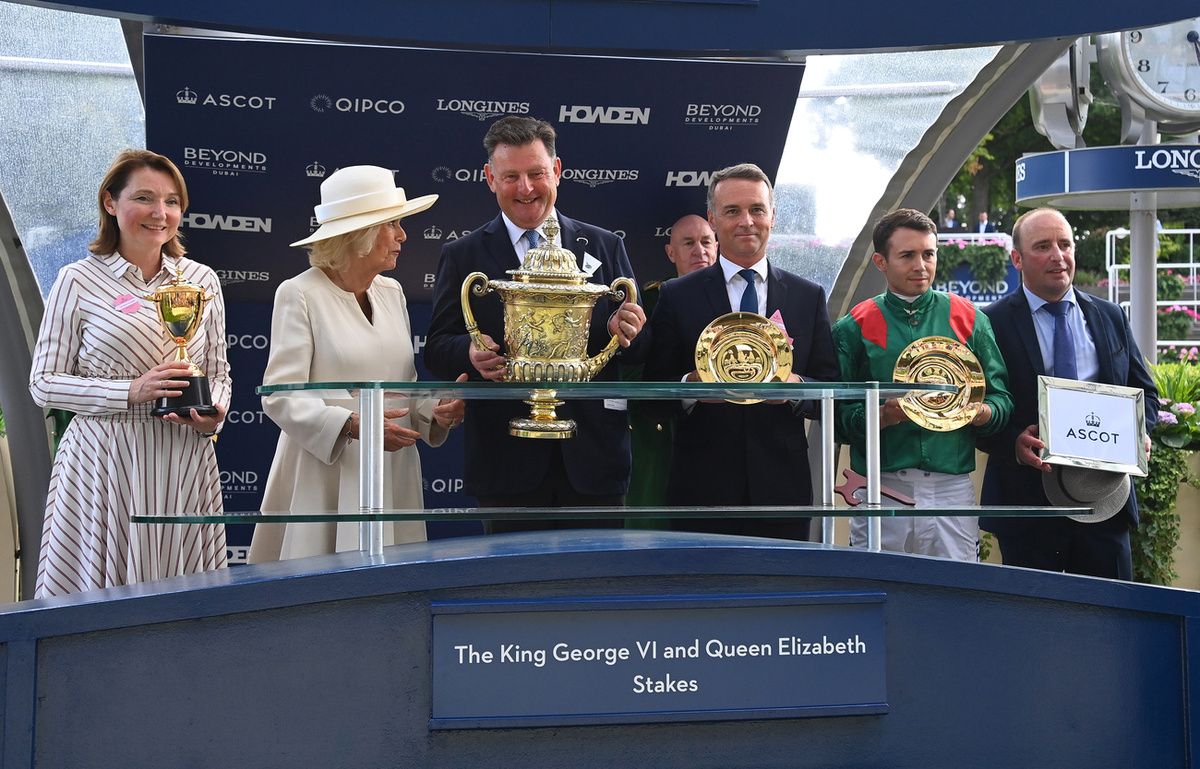 Ascot 26 July 2025 King George VI and Queen Elizabeth Stakes Calandagan wins for delighted connections
© Healy Racing Photos
In 2025, the winner of the King George VI & Queen Elizabeth Stakes at Ascot, Calandagan, banked a staggering €978,247. That's more than double the Gold Cup purse for a single afternoon's work. And the horizon looks even more lopsided; by 2026, the King George prize fund is projected to hit €2.3 million.
Even the Grand National, which remains the high-water mark for jumps with a €575,000 winner's check, struggles to keep pace with the sheer commercial gravity of the Flat.
David vs. Several Goliaths
Once you look outside the paddock, the numbers move into a different stratosphere. The Gold Cup's total prize fund is basically a rounding error for global sports ecosystems built on broadcast rights and year-round international audiences.
To put it in perspective, the Premier League champions take home €201.1 million, and Formula One's constructors' champions walk away with €122.2 million. Even the newly expanded FIFA Club World Cup in 2025 offered a €99.8 million winner's prize, while the 2026 FIFA World Cup is set to contribute a record-breaking €42.4 million to the winning nation.
These aren't just prizes; they are sovereign-wealth-sized payouts that racing, with its fragmented ownership and betting-heavy model, simply cannot match.
Even in the world of individual sports, the gap is widening. A Wimbledon singles champion or a US Open (Tennis) winner clears €3.45 million or more. In golf, the US Open winner now secures €3.65 million, nearly nine times the reward for winning at Cheltenham.
These sports rely on centralised commercial deals that allow for massive individual payouts, whereas racing is a broader, more distributed economy.
At the lower end of the spectrum, the League of Ireland Premier Division champions receive €125,000, a figure that reflects a limited broadcast reach.
But the Gold Cup is different. It's a "value-defining" event. A win at Cheltenham doesn't just pay the training fees; it sky-rockets the horse's asset value. For owners and breeders, the real money is made through stallion fees and future sales. In that sense, the Gold Cup functions less as a single payday and more as a prestige-validation event that secures a horse's legacy (and its price tag) forever.
The 2025/26 data makes one thing clear: the Cheltenham Gold Cup is more about prestige than it is financial glory. While Flat racing and global tournaments are chasing record-breaking prize pools, Cheltenham remains a reminder that in some sports, financial scale and sporting significance don't always align. Sometimes, the trophy is worth way more than the money used to fill it.